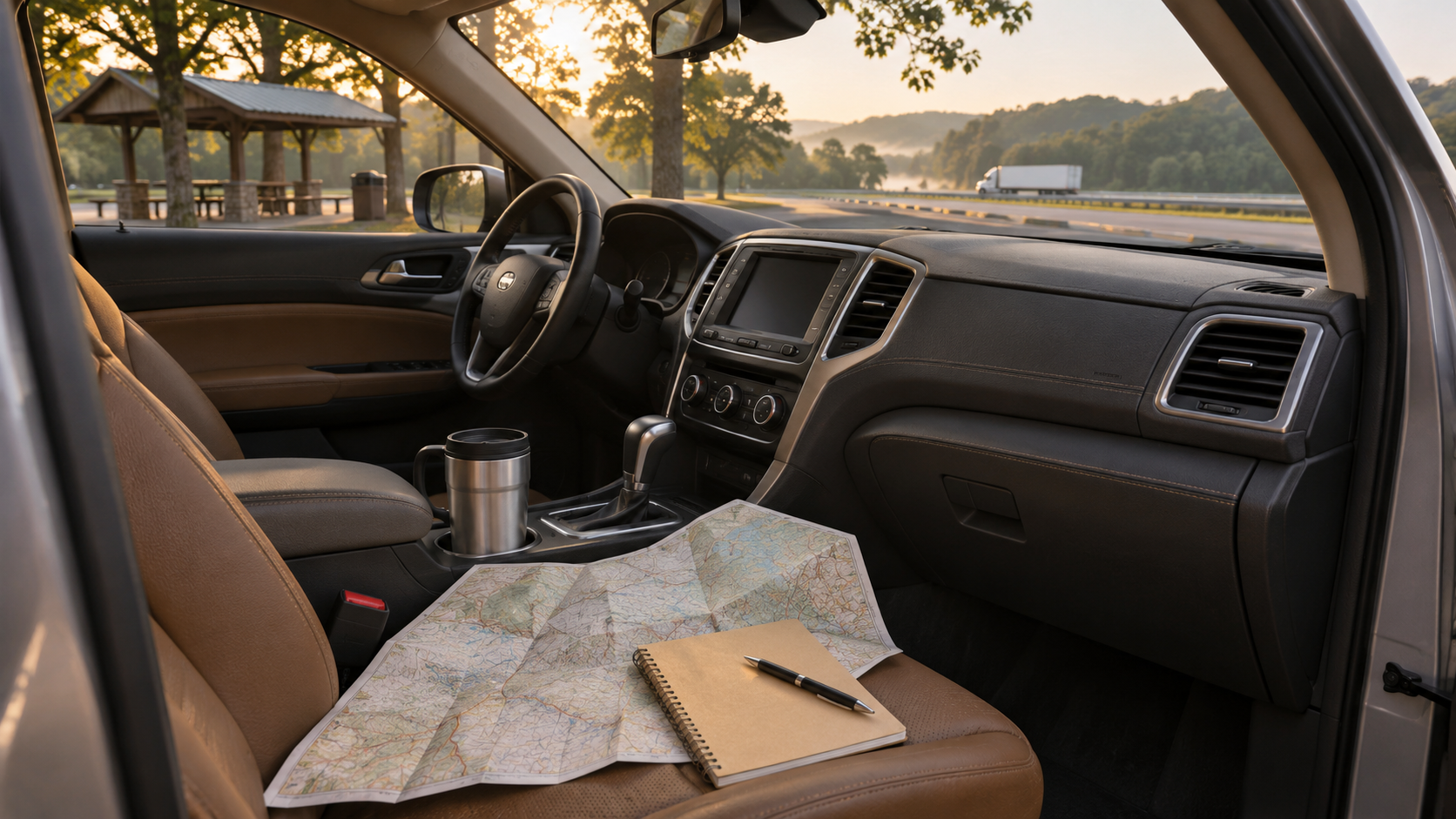
The route looks simple on your phone. You’ll cross two state lines, stay overnight near the highway, and reach your destination the next morning. Then a friend tells you that your home-state carry permit is recognized “pretty much everywhere along the way.” Which states does that mean? Does the answer change when you stop overnight?
Those are questions to resolve while you’re still planning the trip. Start with the official sources for the states on your route, then check the rules for the places you plan to visit. A permit map can help you identify what to look up. The issuing agency, state statute, or property authority is where you verify the details.
Write Down the Entire Route
List your departure state, every state you expect to cross, and your destination. Include the places where you plan to stop for the night or spend time away from the car. If you’re choosing between two routes, note the states on each one so you can see which questions the alternate route adds.
A navigation app plans around traffic and distance. It can suggest a detour that crosses a state line you hadn’t expected. If you think you’ll take an alternate route, check it before leaving. Keep the names of planned stops in your notes so you can tell which sources apply to each part of the trip.
Check Permit Recognition and Vehicle Rules Separately
For each state, look for firearm information from the state police, attorney general, or agency responsible for carry permits. The Bureau of Alcohol, Tobacco, Firearms and Explosives also publishes a state-by-state compilation of firearm laws and ordinances that can help you find the relevant provisions. Verify the current text through the state’s own official sources. ATF
If an official page says the state recognizes certain out-of-state permits, check whether it covers your specific permit and whether it lists any conditions. Then look separately for the state’s rules on firearms in vehicles and restrictions that may apply at your stops. Save the exact page and the date you checked it so you can find it again before departure.
Write down unanswered questions as you go. “Does this state recognize my specific permit?” is a better research note than “Check State B.” A precise question also makes it easier to explain the issue if you need help from the relevant agency or a qualified attorney.
Read the Federal Interstate Transport Provision
The federal provision commonly cited in road-trip discussions is 18 U.S.C. § 926A. It sets conditions for qualifying interstate transport, including lawful possession and carry at both endpoints, an unloaded firearm, and restrictions on access to the firearm and ammunition during transport. The statute also addresses vehicles without a compartment separate from the driver’s compartment. Read the full text in the official U.S. Code before relying on it. uscode.house.gov
If your plans include an overnight stay, extended stop, or other interruption and you’re unsure how the provision applies, get advice from a qualified attorney before the trip. Give them the actual itinerary and vehicle details so they can address your situation.
Check the Places Where You’ll Actually Stop
A state-level lookup is one part of the trip. Your itinerary may also take you to a hotel, a government building, or a recreation site. Find out who manages each property and check its official rules before assuming the information you found for the state answers the question for that location.
Be specific when you look things up. A park can include outdoor areas, visitor buildings, and facilities managed by different entities. If the official information is unclear, contact the property manager or responsible agency about the exact place you plan to visit. Save the relevant page or written response with your trip notes.
Keep a One-Page Trip Record
Use a simple note or spreadsheet so you can see what you’ve verified and what still needs an answer.
What to record What to look up
Route and alternate route States crossed and planned stops
Permit recognition Official state guidance for your specific permit
Vehicle rules Current state statute or official agency guidance
Overnight stay or site visit Rules for the exact property and jurisdiction
Federal transport provision Official text of 18 U.S.C. § 926A
Follow-up Unanswered question, source link, and date checked
Reopen the official sources shortly before you leave, especially if the itinerary has changed. If an important question is still unresolved, settle it before departure or leave the firearm at home. A one-page record gives you a clear view of what you verified while there’s still time to change your plans.